llm multi-agent marketing system
an autonomous, self-improving team of llm agents that runs linkedin marketing.
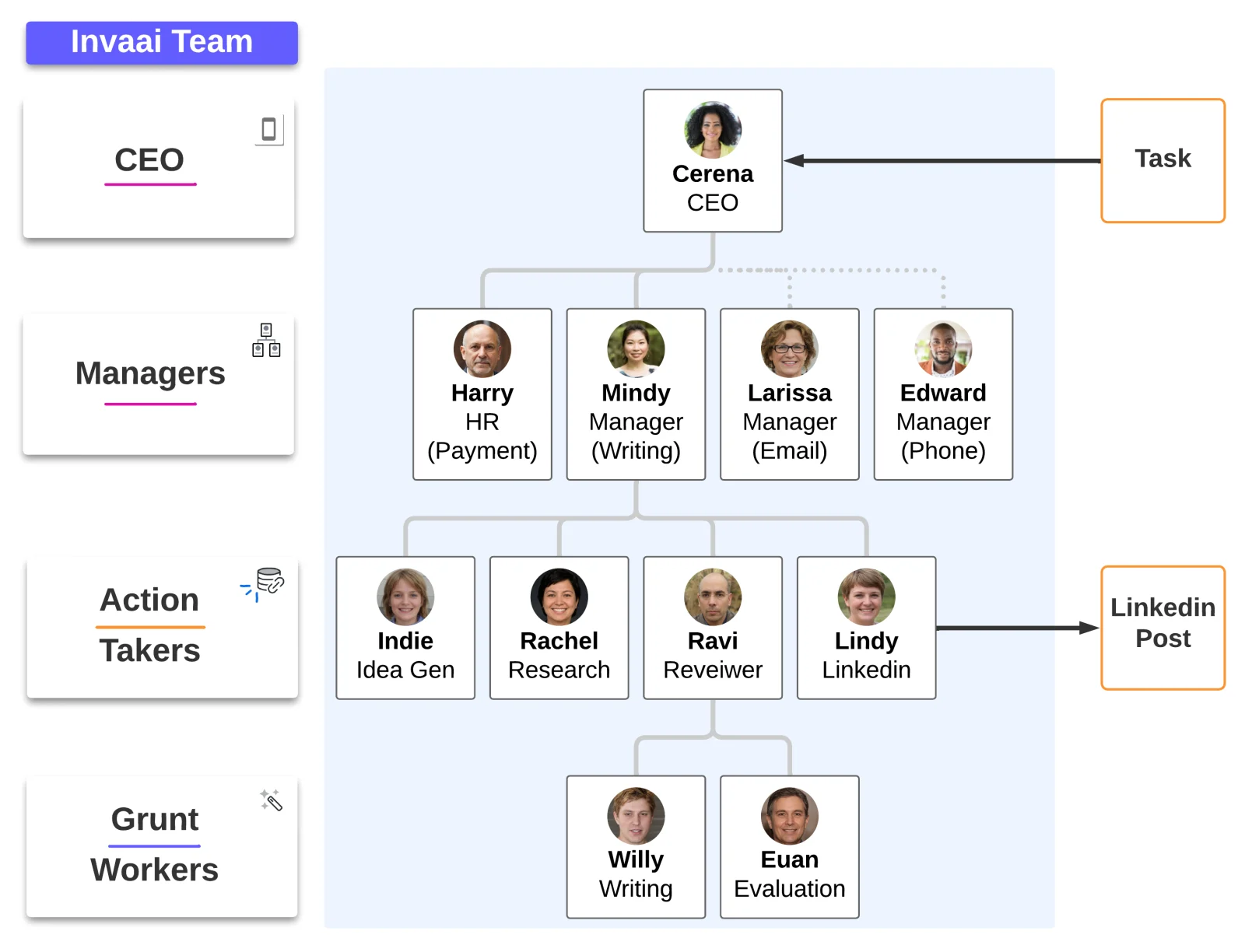
during my masters thesis at the university of bristol, i built a multi-agent linkedin marketing system.
this project earned me the award of "best enterprise project" within the graduating cs class of 2024 at the university of bristol.
the team and their roles are shown above. keep reading to find out how they work.
this autonomous, self-improving team of llm agents does the following:
- comes up with a new idea
- researches the idea with relevant source citations
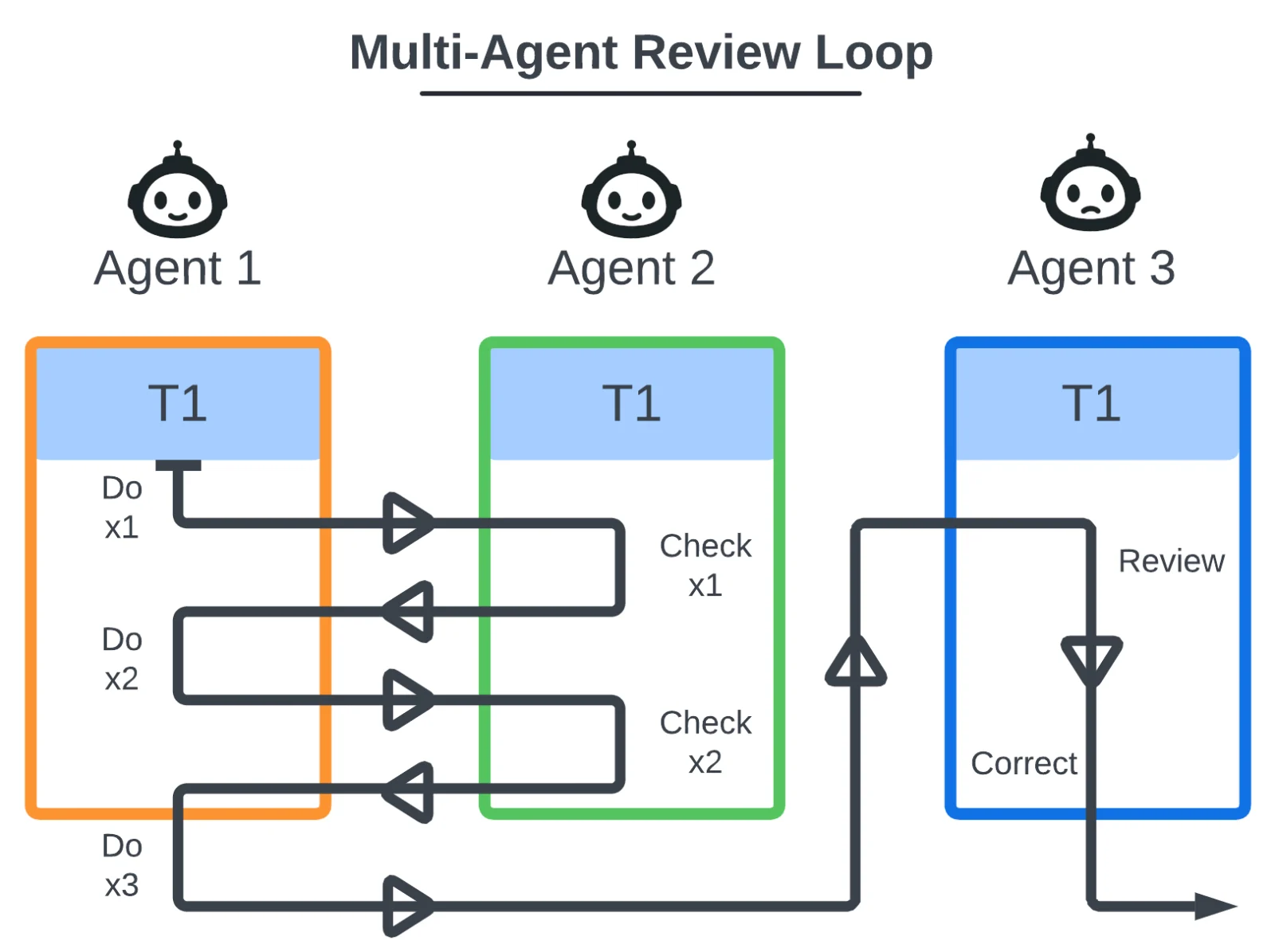
- writes a linkedin post (multiple times, based on review)
- reviews and rates it against 32 relevant metrics (multiple times, based on the agents' decisions)
- checks for false info, wrong citations, insensitive wording, etc.
- posts to linkedin
- collects and reviews engagement data
- uses the collected data and previous ratings to improve on the next run
all the actions the system takes run completely without human intervention. the multi-agent review loop is visualised below.
the research hypothesis was to test whether a multi-agent system beats a single-agent system at this task.
logically it makes sense, but i wanted to test it rigorously. llm systems have a fixed context window (the number of tokens available for a task), and that affects the quality of execution. in a single-agent system context can get lost, leading to worse performance.
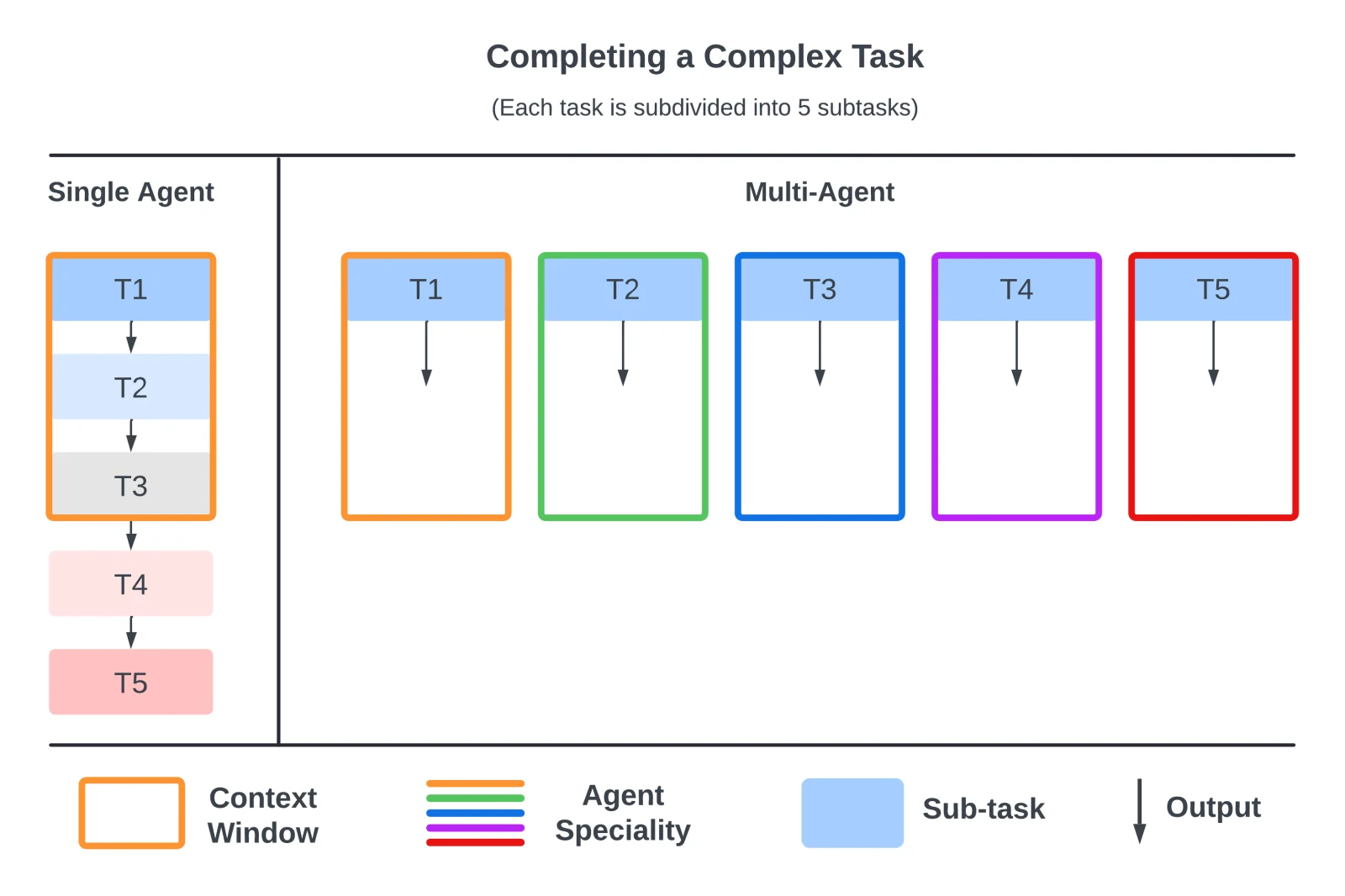
to build the system i used three main tools: airtable to host the databases and content, relevance ai to host the agents and the custom python tools they call, and aws to host the interactions between agents. the general architecture is below.
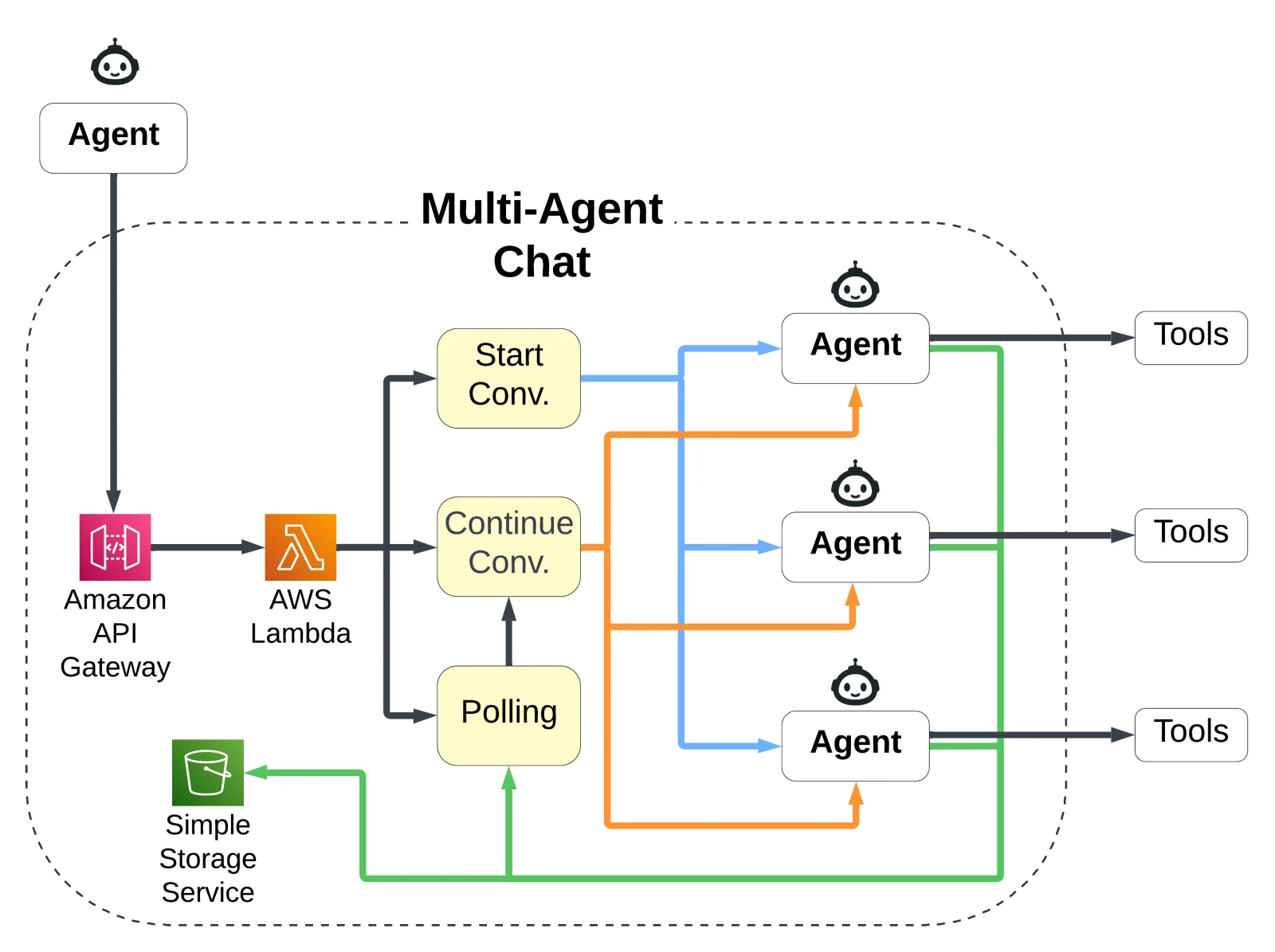
initially the plan was to use microsoft's autogen or crewai, but for speed and simplicity i built my own multi-agent chat framework on aws. an agent can start a chat with any number of other agents to work on any task it chooses.
each agent has two types of tools:
- tools to access external services like google, linkedin, slack, and airtable
- llm generation tools: highly specific, well-written mini-prompts that act as an abstraction over the main system prompt
these tools let each agent contribute valuable input to the multi-agent chat it's part of.
this project was an attempt to see whether an entire department could be replaced with ai and automation. will we enter a future where all knowledge work is done by ai systems? who knows.
along the way i did a lot of prompt engineering, ai app building, and reading academic papers.
if you'd like to learn more, send me a message. i love chatting about this project :)